The Isle of May has been on my list of places to visit for a long time now. The island is a hidden gem in the Firth of Forth and a popular place to visit to see Puffins up close and personal. I visited in June which is the perfect time to see the Puffins and their little Pufflings before they head out to sea. There are of course lots of other birds to see out on the island, but the Puffins are the star of the show!
Getting There
There are two ways of getting there, the first choice, which is the one we went for is to travel to the charming harbour town of Anstruther in the East Neuk of Fife (which is worth a visit itself). We travelled with Anstruther Pleasure Cruises, who are based down at the harbour. Usually, you can find parking beside their office, but there is building work ongoing, so parking has been provisioned out of town behind the Co-op (about a 10-15min walk away).
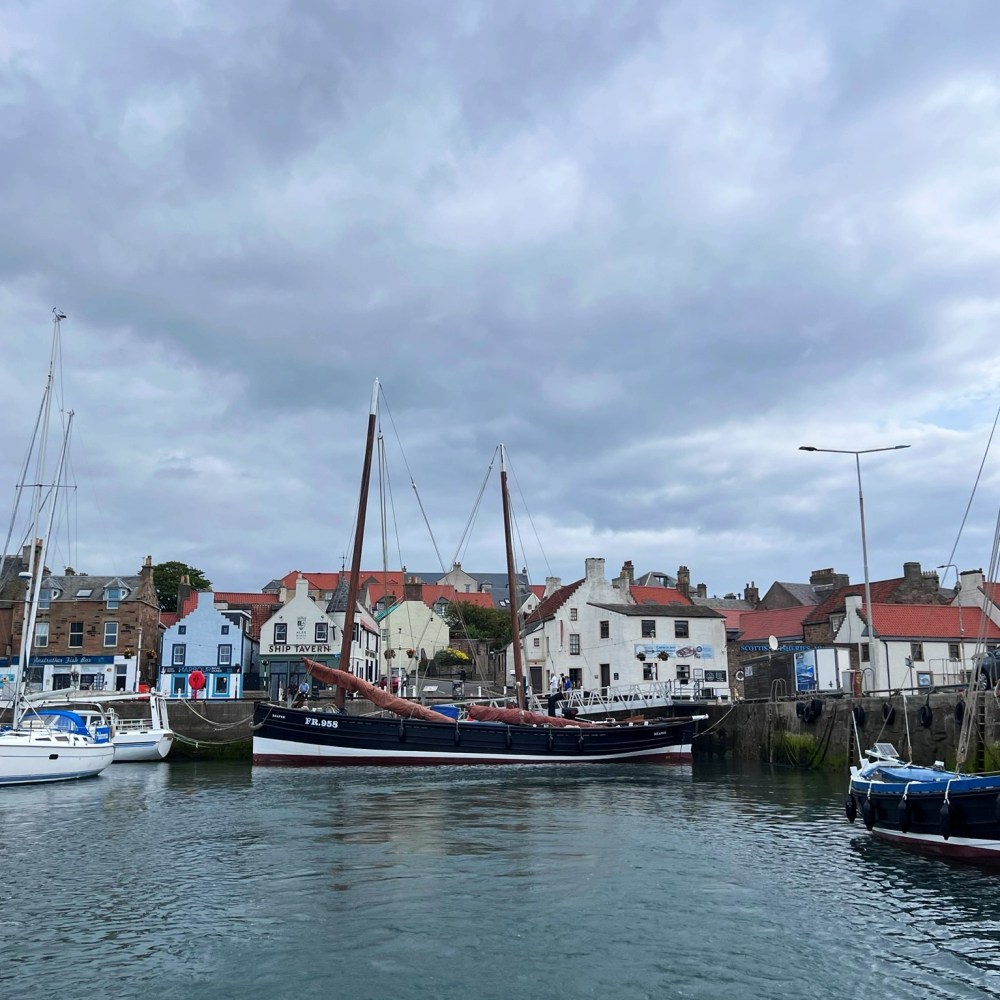
We boarded the May Princess, which is a sturdy vessel with open decks perfect for spotting seals and seabirds en route (which we were thankful for on the way back when the weather took quite the turn!). The crossing takes about 45 minutes and the weather on the way out made for a smooth sailing, meaning the binoculars were out and anticipation building.
The other choice is to travel to the East Lothian town of North Berwick (another town worth a visit in its own right), and head out to the Isle of May on one of the trips organised by Seafari. I haven’t used this company before but have heard good things, where you leave from depends on where you are staying and how far you are willing to drive.
It is also worth noting that the trips do not leave at the same time each day, they are subject to tide times, so check the company’s website for the departure time on your desired date and factor that into your travel plans.
Tip: Book tickets in advance via Isle of May Boat Trips – summer sailings fill quickly, especially during puffin season.
First Impressions
Landing at Kirkhaven Pier, we were greeted by the island’s warden and a chorus of Arctic terns overhead, as well as the ‘aroma’ of many seabirds. The warden gave a short talk on the Isle of May, the history and what we might see that day. There is a small exhibition which is worth reading, and its undercover, so a little protection if it does rain.
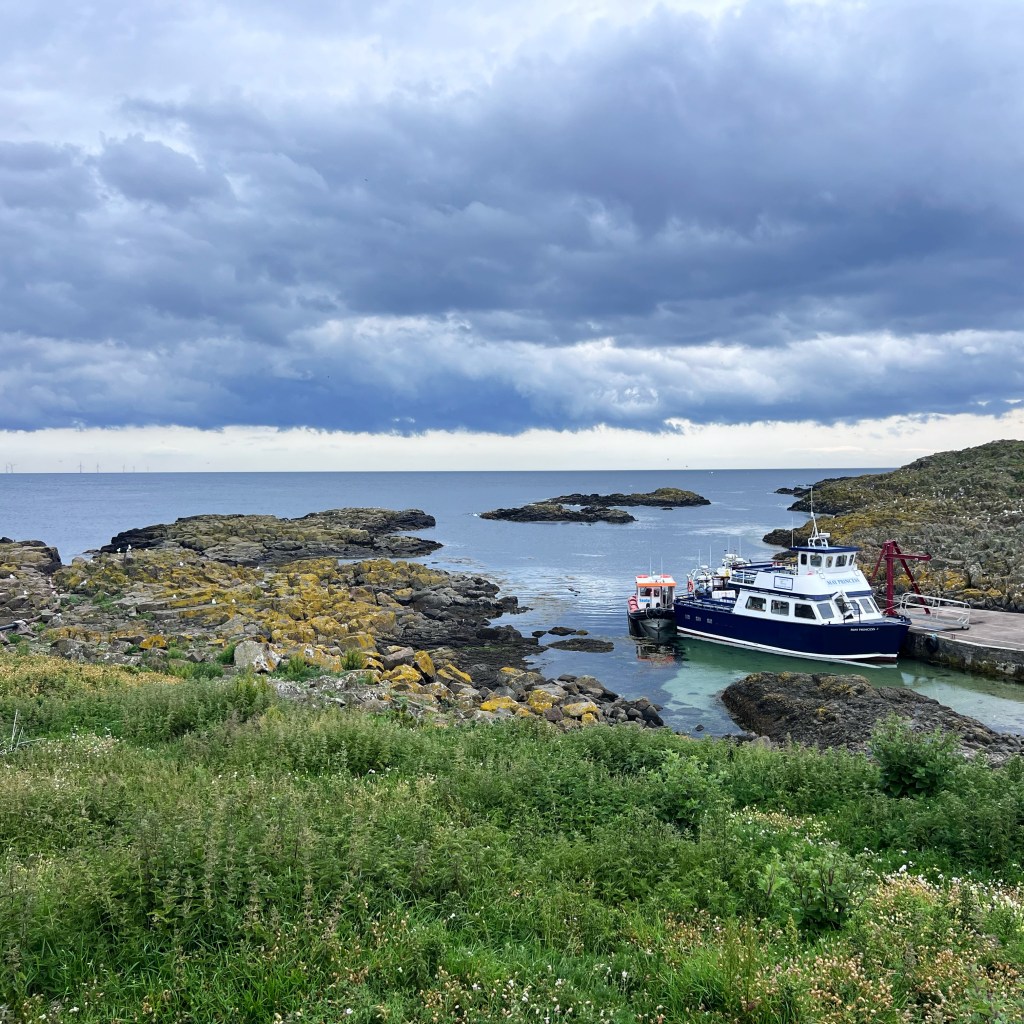
The Isle of May is a National Nature Reserve, managed by NatureScot and visitors are gently reminded to tread lightly, stay on the paths – this is a sanctuary first and foremost.
The island stretches just 1.5 km long, but its compact size belies its richness. Paths wind through wildflower meadows, rocky outcrops, and ancient ruins, each turn offering a new tableau of nature and history. The landing trips allow around 3 hours to explore, which can pass quite quickly even on such a small island.
Puffin Paradise
June is peak puffin season, and the island was alive with their comical charm – bright beaks, waddling walks, and sudden dives into the sea. We walked to the tip of the island, near the cliffs at the small peninsula of Rona and Lady’s Bed, where thousands nest in burrows, their calls echoing like a seaside symphony. Rona is only accessible to NatureScot and is used as a research area.
There can be up to around 200,000 puffins and pufflings on the island at the peak, so in June you are definitely likely to see them, and very closely as well. Be careful, they love to dive and are very quick and sprightly, and in one instance I thought they were going to fly straight into my head!
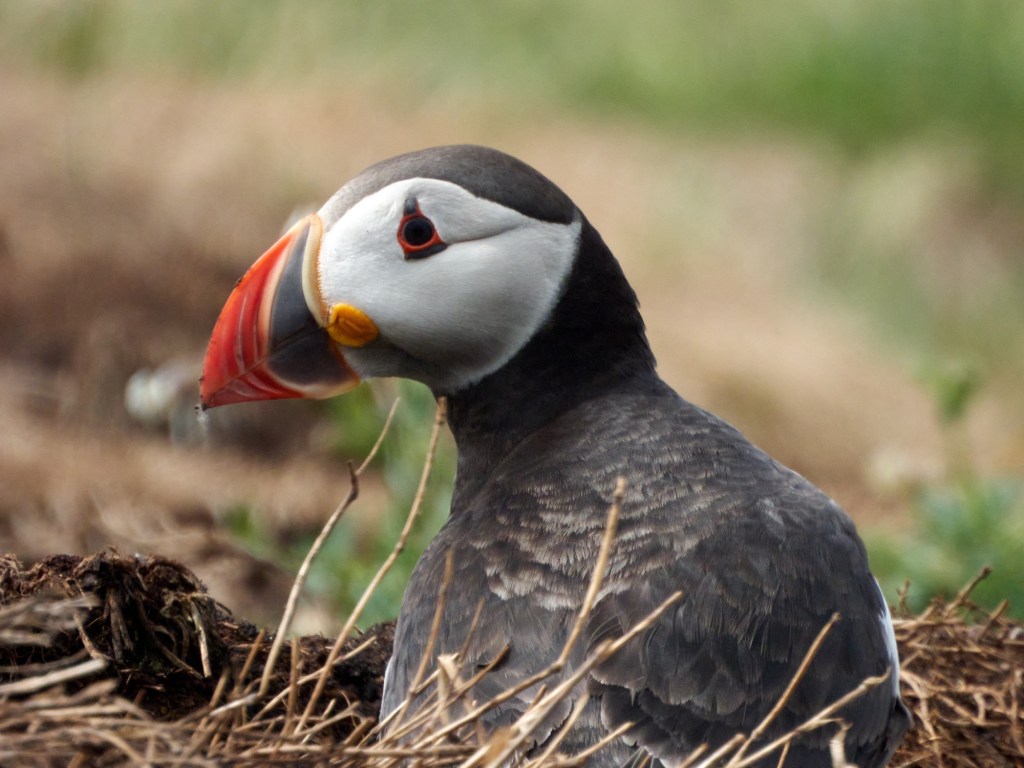
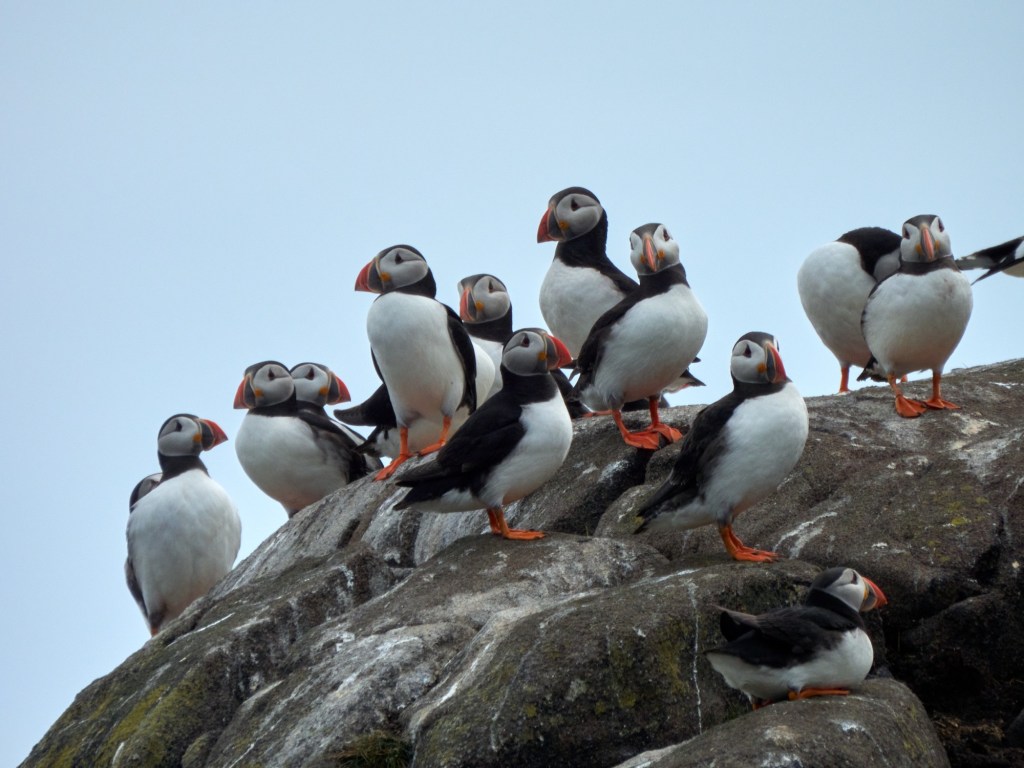
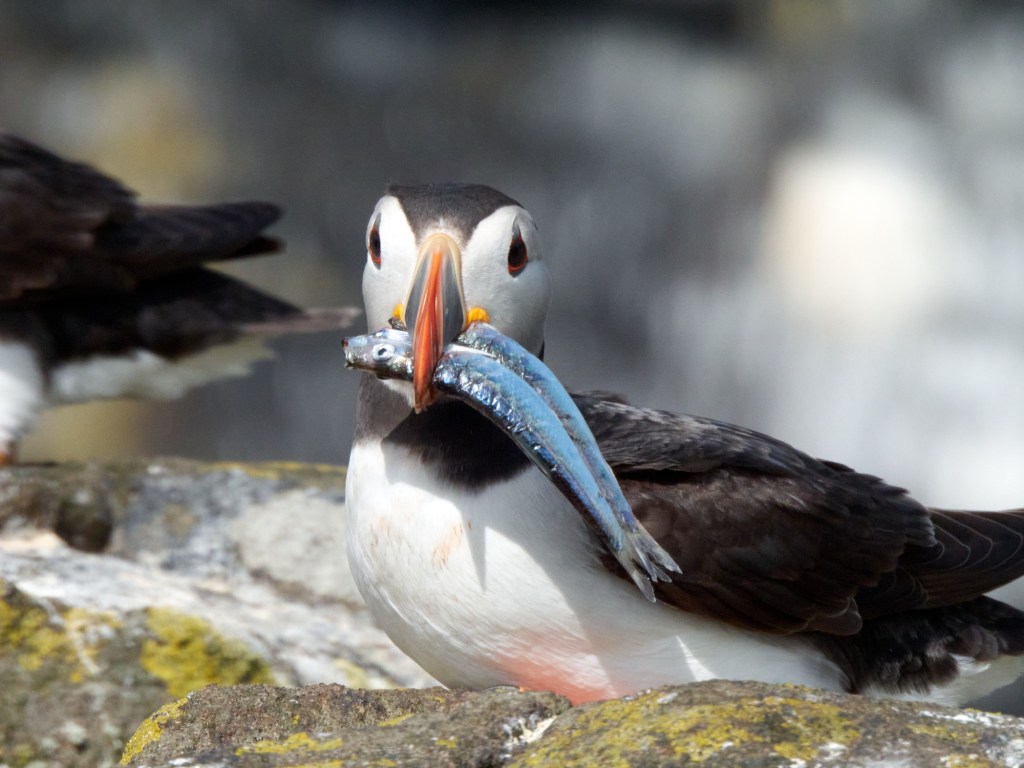
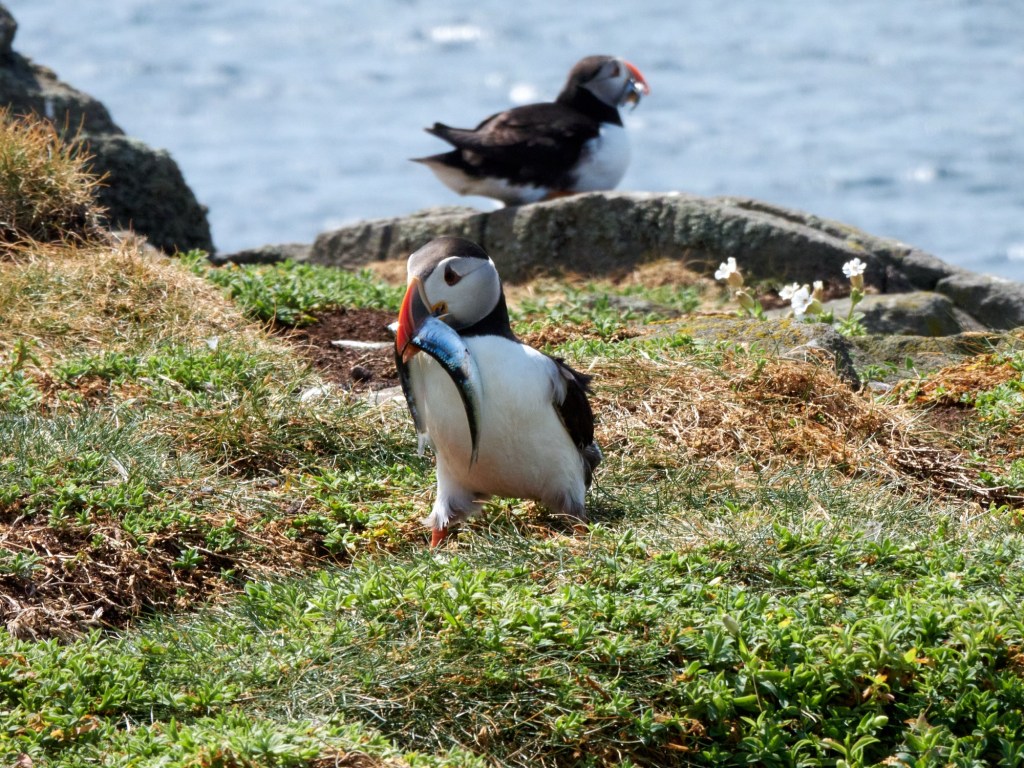
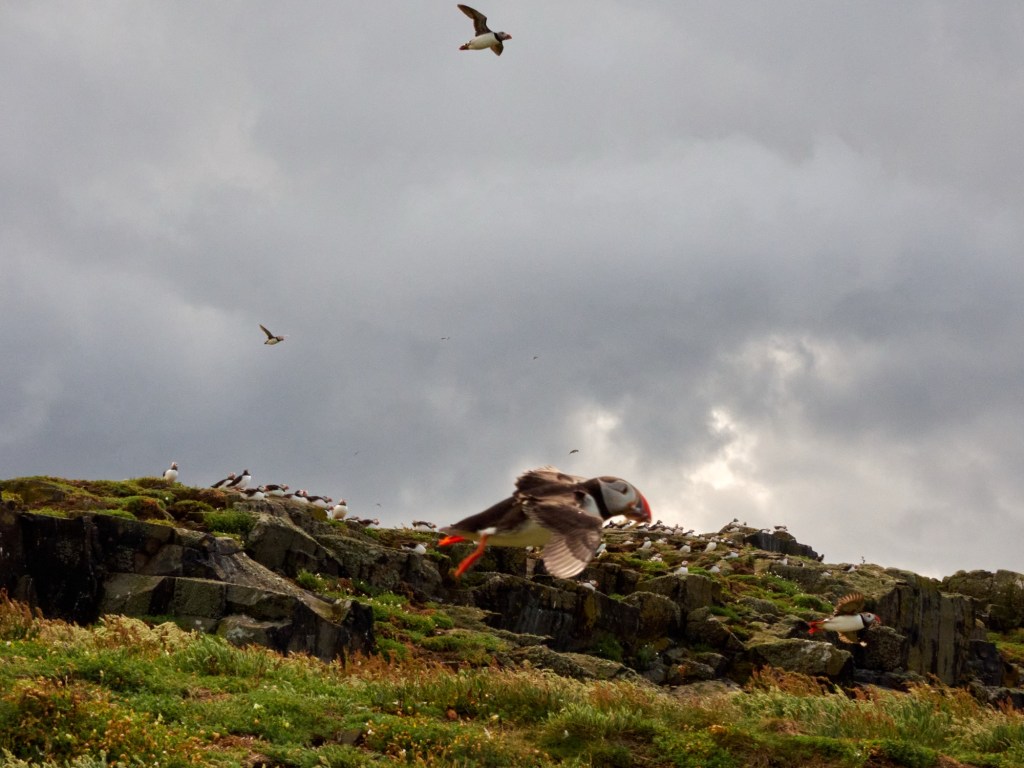
We did see other wildlife, not quite at the same levels of abundance but these included:
- Grey seals bobbing about in the harbour
- Guillemots, razorbills, and kittiwakes nesting on ledges
- A fleeting glimpse of a peregrine falcon overhead
Tip: Bring a good zoom lens or binoculars – the wildlife is abundant but respectfully distant.
Not just about the wildlife
Beyond the wildlife, the Isle of May holds layers of history. There are the ruins of the 12th-century priory, once a pilgrimage site dedicated to St. Ethernan, a 7th-century monk, who was said to have lived as a hermit on the island – his legacy drew pilgrims for centuries. Unfortunately I didn’t have time to explore (distracted by the puffins!). There is the lighthouse, built in 1816 by Robert Stevenson, still stands sentinel – its story entwined with shipwrecks and sea lore.
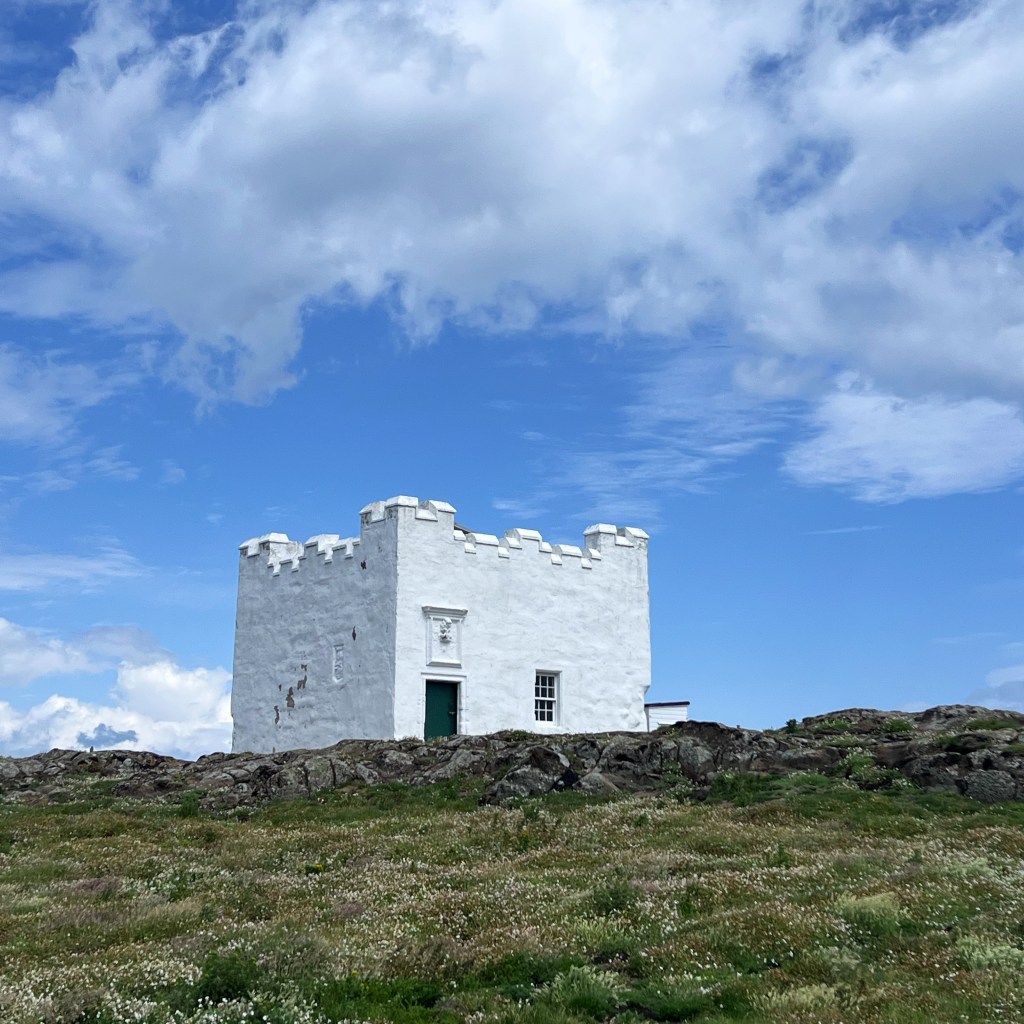
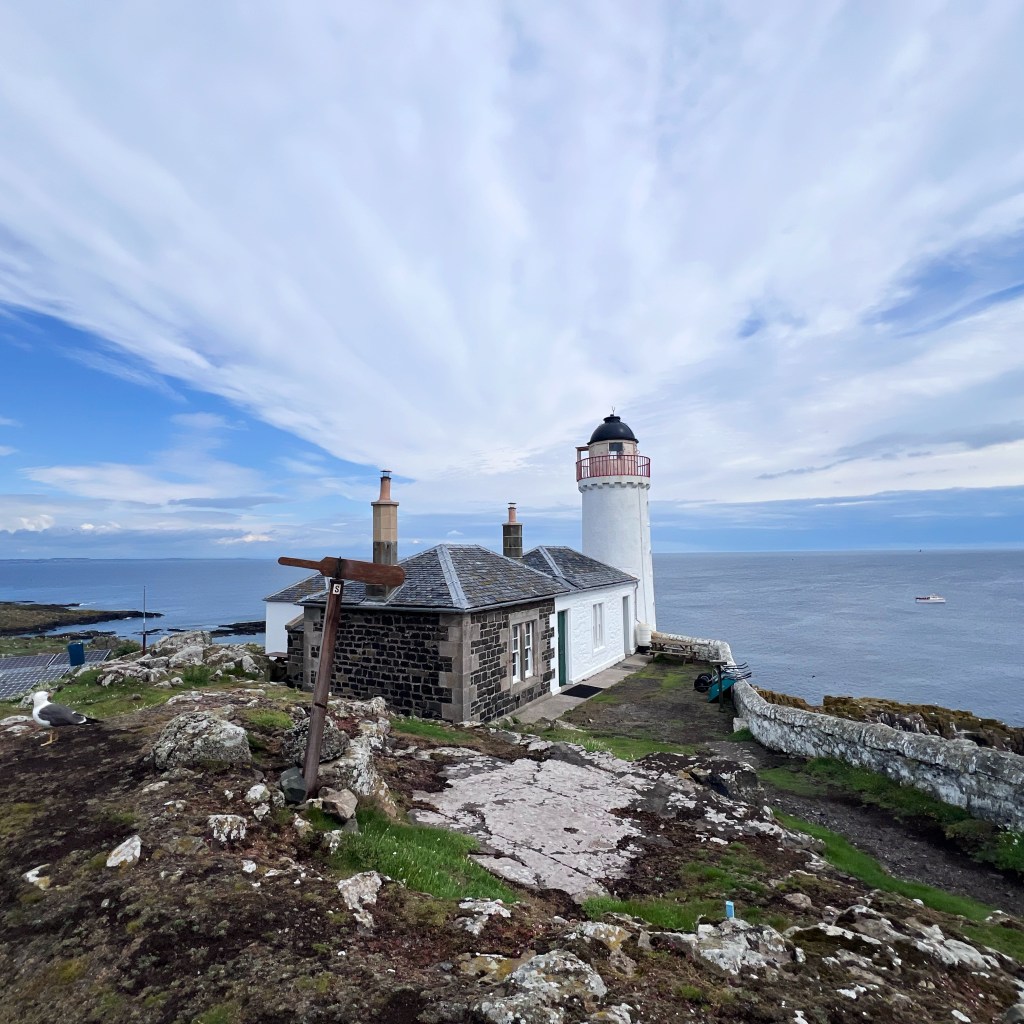
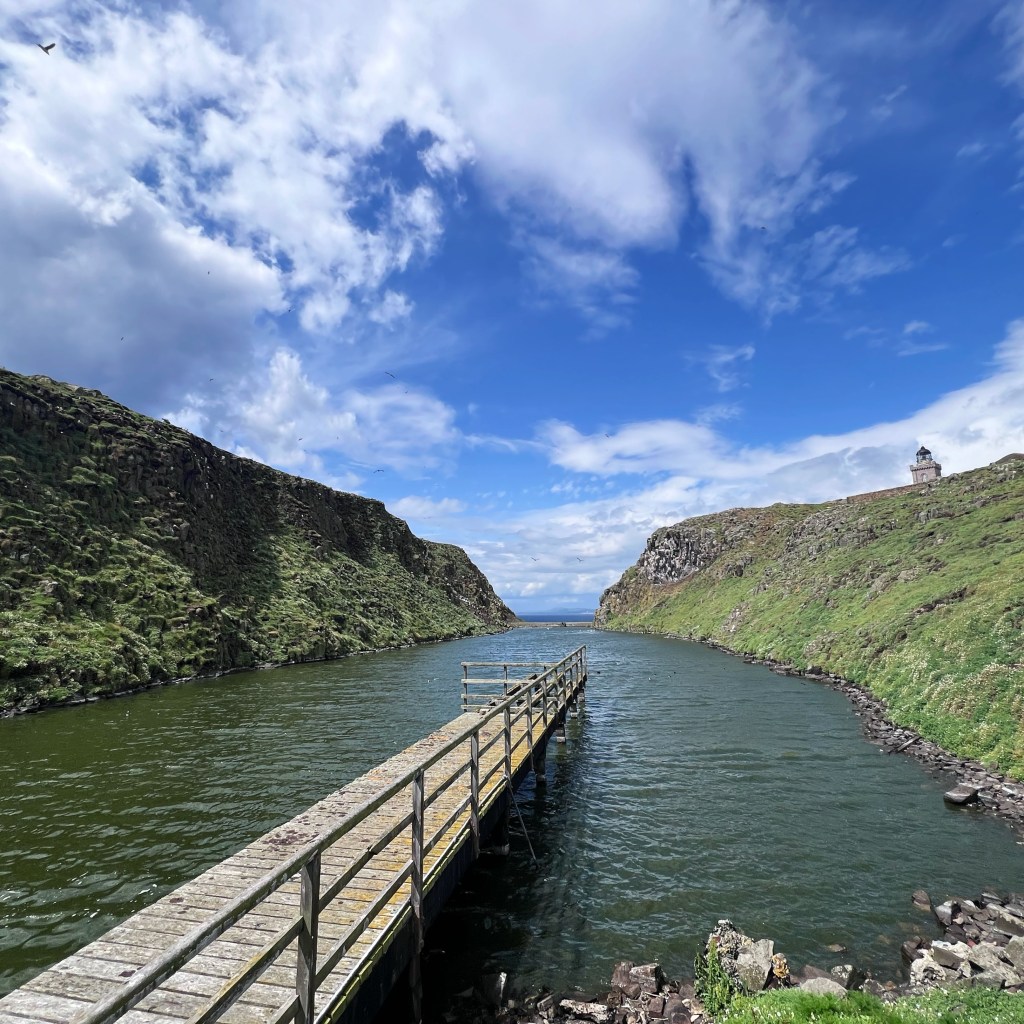
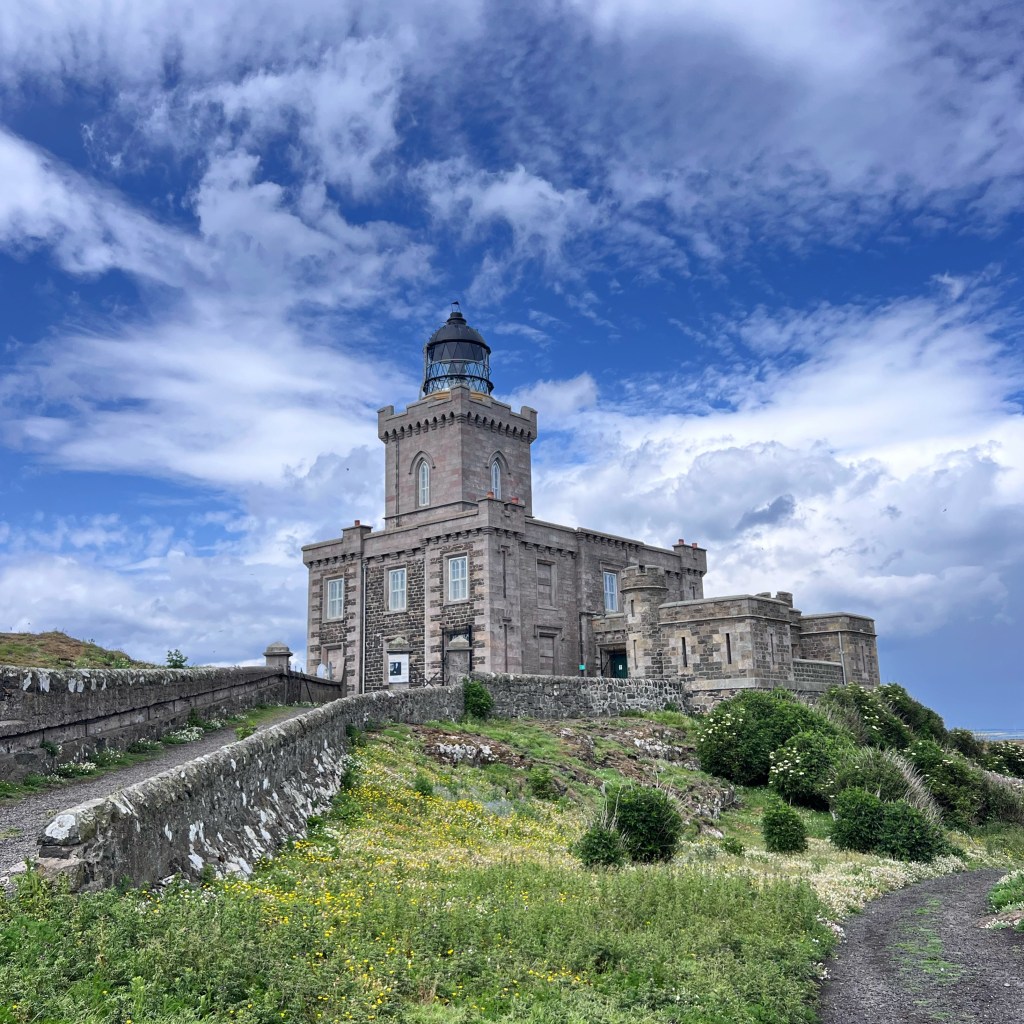
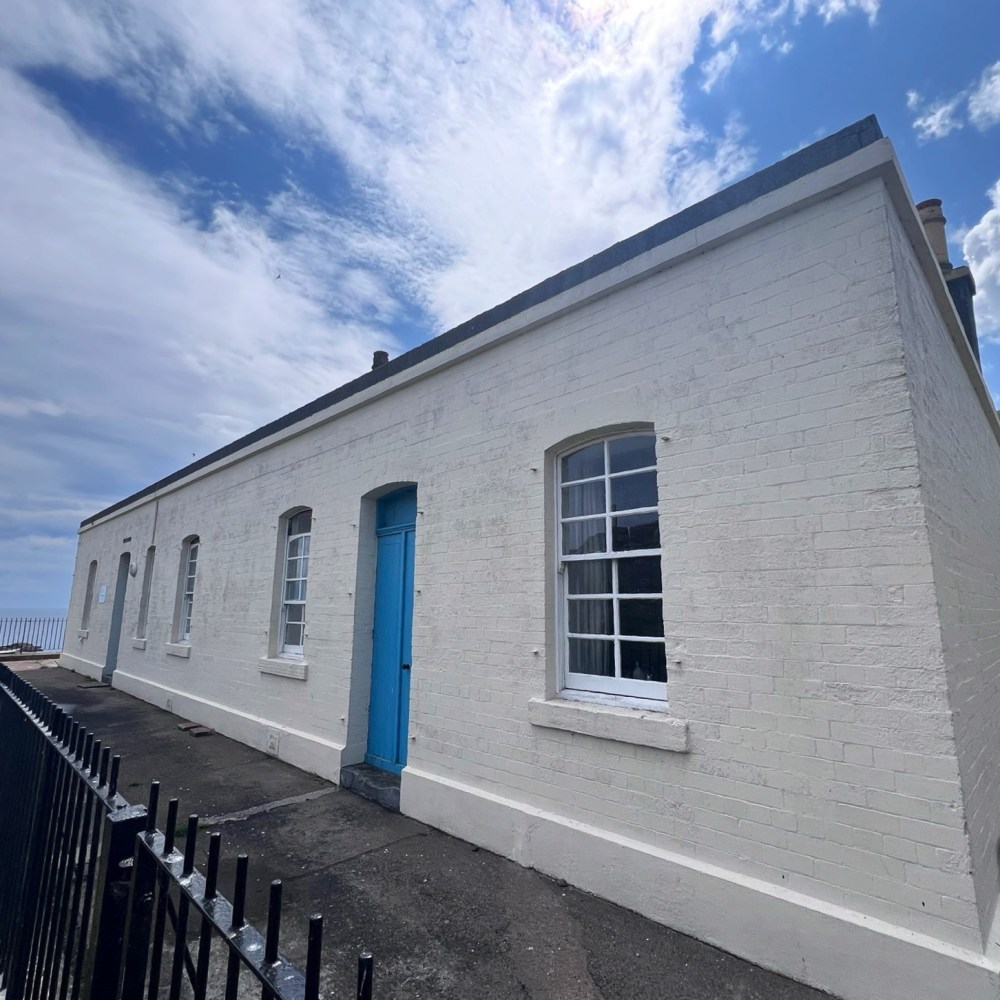
Also, you can find some small houses where the lighthouse operators once lived, a little community, where staff and researchers from NatureScot now live to protect and watch the wildlife on the island.
Picnic with a View
There are no cafés on the island, so we packed a picnic which we enjoyed perched on a grassy knoll overlooking the sea, trying to avoid the seagulls stealing my sandwiches! Our boat was quite early in the morning, but if you have a later start there are plenty of little farm shops and delis nearby (like Bowhouse and the East Pier Smokehouse) where you can pick up some local treats to enjoy. The important question is though – are there toilets on the island? The answer is thankfully yes!
Leave no trace: all rubbish must be taken back with you.
The Return
By early-afternoon, the boat returned to collect us, and I reluctantly left the island’s serenity behind. The weather had taken a turn, so was the total opposite of our journey out. Constant rain and wind, with large waves spraying over the front of the boat. We were sitting outside (there is a small inside cabin) so got the full brunt of it. We arrived back in Anstruther absolutely soaked through, and to blue skies and sunshine – a typical Scottish day.
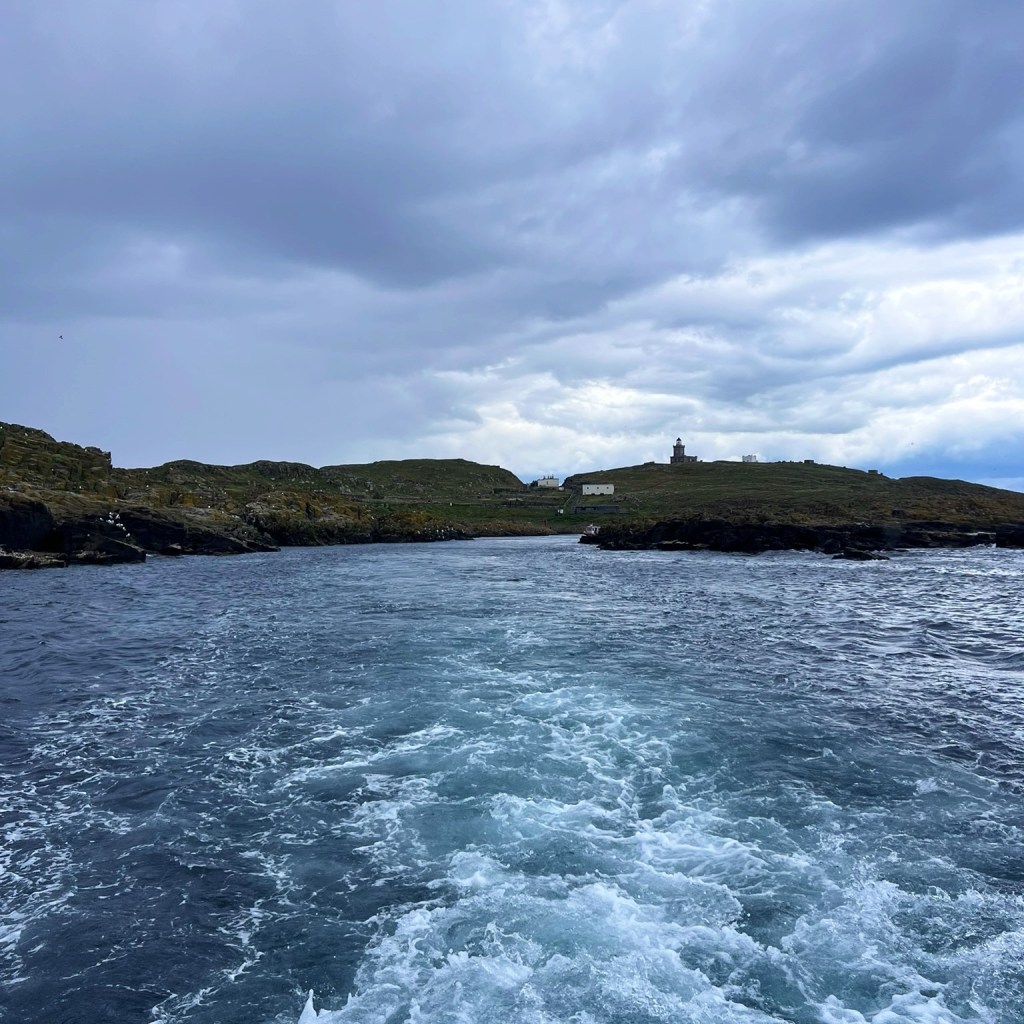
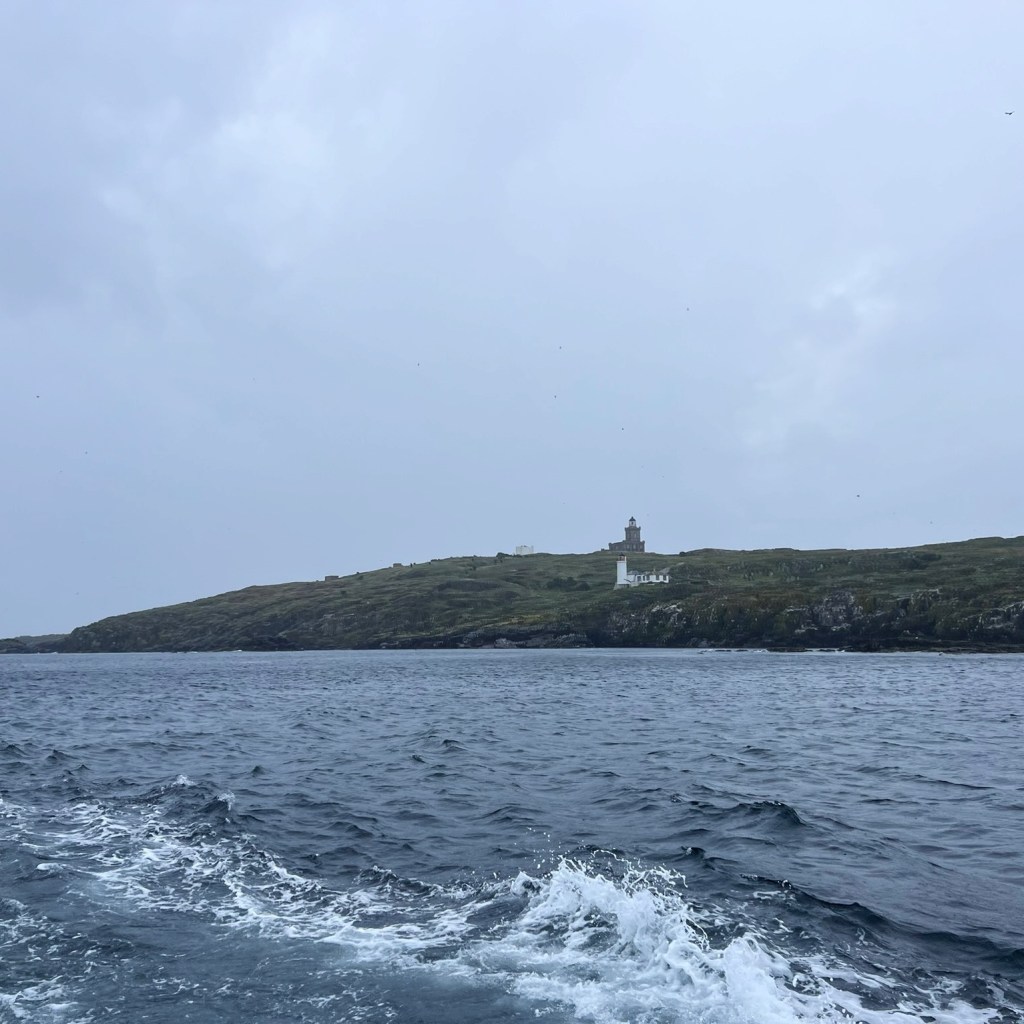
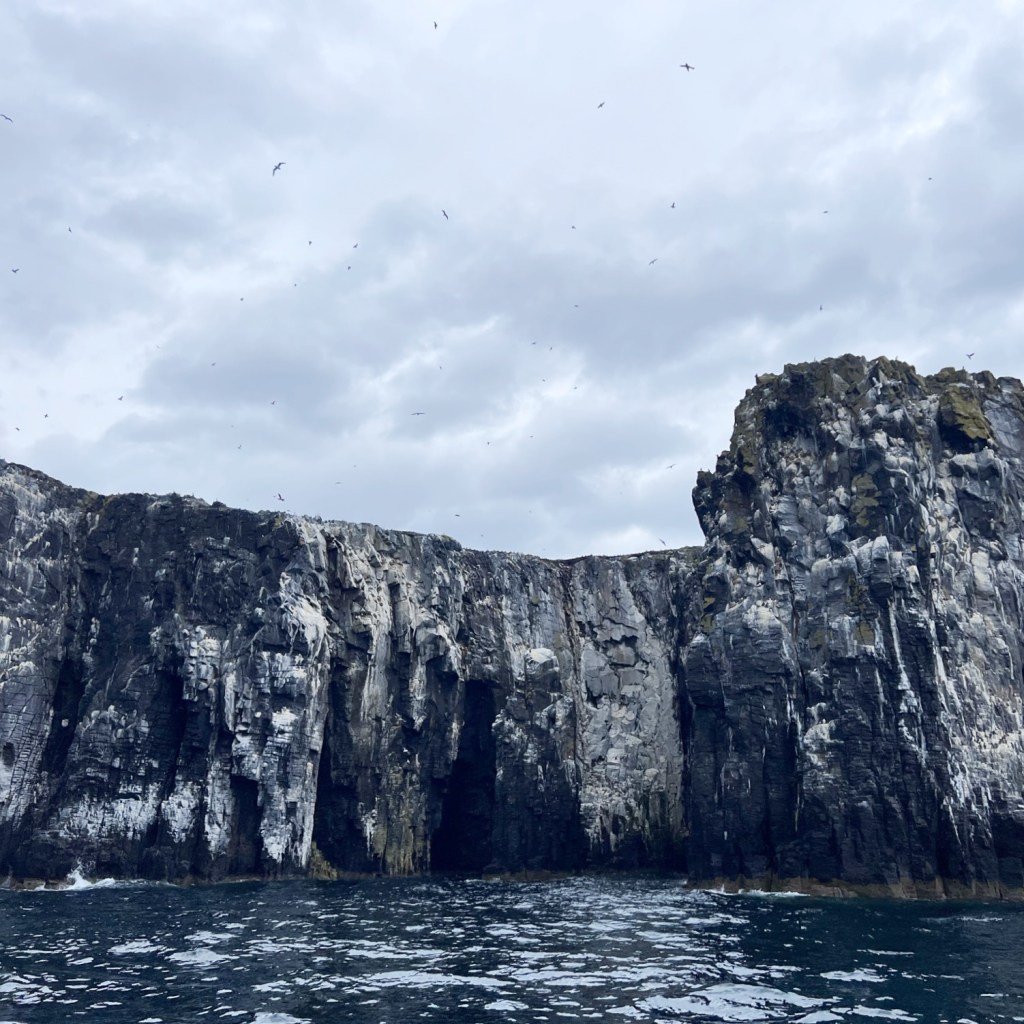
Due to being completely soaked we just headed back home. Nonetheless, having visited Anstruther before, having a wander around the town and enjoying an ice cream from Scoop or fish and chips from the Anstruther Fish Bar on the harbour is a great way to end the day.
Practical Notes
The Isle of May is pretty exposed, there is not much shelter on the island, so prepare for four seasons in one day, with waterproofs, sturdy shoes and layers. Don’t forget binoculars and most importantly your camera!
As the terrain is uneven, with some narrow paths, particularly near the cliffs, the island is not suitable for all mobility levels. Getting on and off the boat is easy enough, but whilst the island is not big, the paths can be challenging for those with mobility issues, so do bear that in mind.
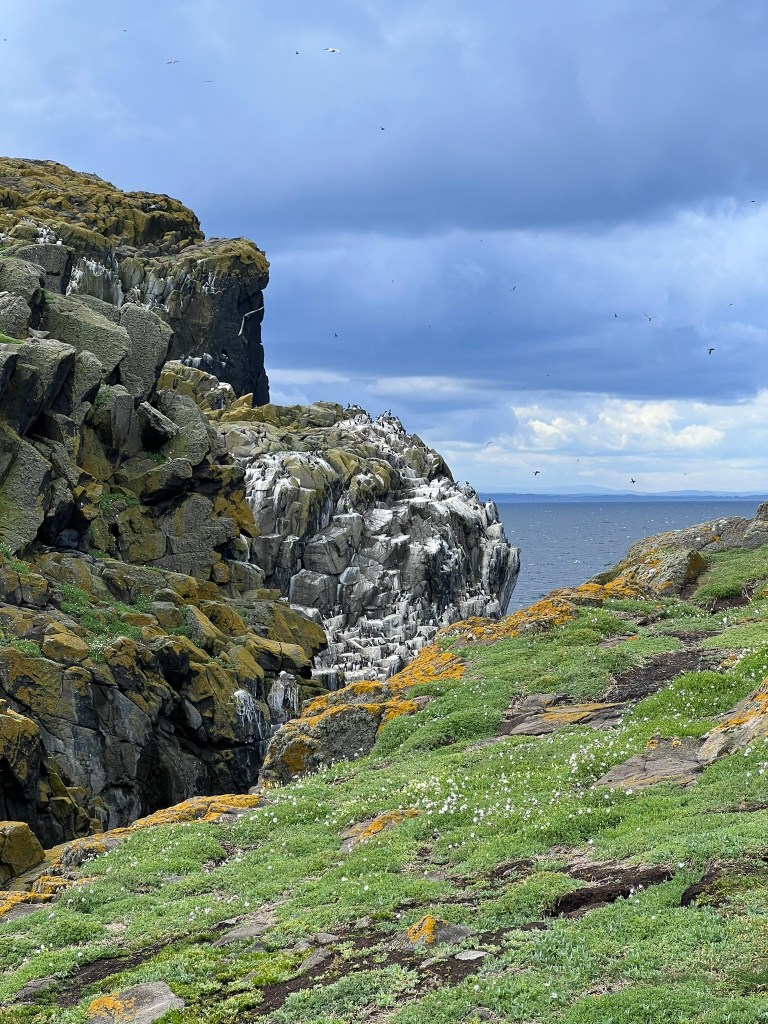
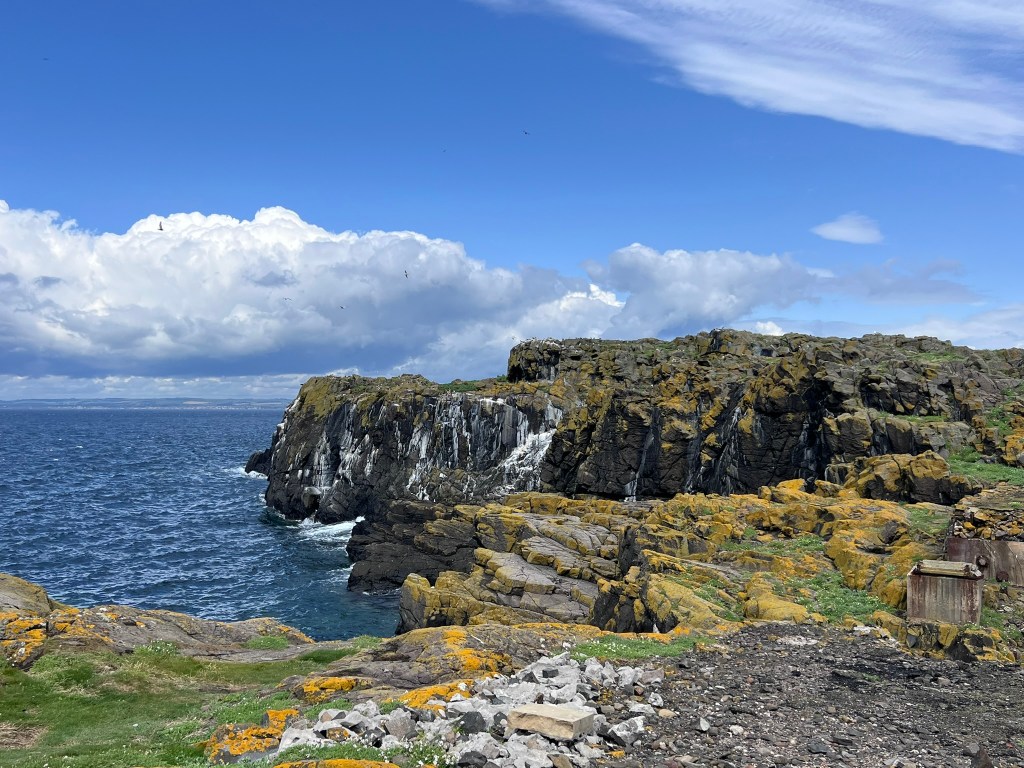
I’m glad I’ve finally ticked it off my to do list, it is an amazing place, and I think a visit is on the cards for next year to visit the part of the island we didn’t have time for. Whether you’re a birder, a history buff, or simply seeking a day of windswept wonder, the Isle of May offers a rare escape – one that lingers long after the boat ride home.
Have you visited the Isle of May? Have you explored any of the other islands in the Firth of Forth, like Inchcolm or Bass Rock, let me know in the comments below.
 Queen of Everything